Systematic Investment Plan (SIP)
is a mutual fund investment plan where an investor can invest a fixed amount in a mutual fund scheme of his / her choice at a regular frequency (weekly, fortnightly, monthly etc). Through a bank ECS mandate, the SIP amount (chosen by the investor) will automatically get debited from the bank every month (or any other interval specified by the investor) and will be used to purchase units of a mutual fund scheme selected by the investor. The number of units purchased will depend on the Net Asset Value (NAV) of the scheme on the SIP date.
Some of the benefits of SIP
One of the Ideal ways for salaried and young investors: You do not need to commit large sums of money upfront. You can invest a portion of your regular monthly savings in mutual funds for your long term financial goals. You can start your SIP with even Rs 500 a month. It is especially advantageous for young investors because they can keep investing through SIP for very long periods
Disciplined Investing: SIP makes your investment process mechanical and not based on emotions like greed or fear, both of which are harmful to your interests. Disciplined investing can give much results in the long run
Highly convenient: You do not need to check market levels and do paperwork each time you want to invest. Through a one-time application or registration you can put your financial planning on auto-pilot mode.
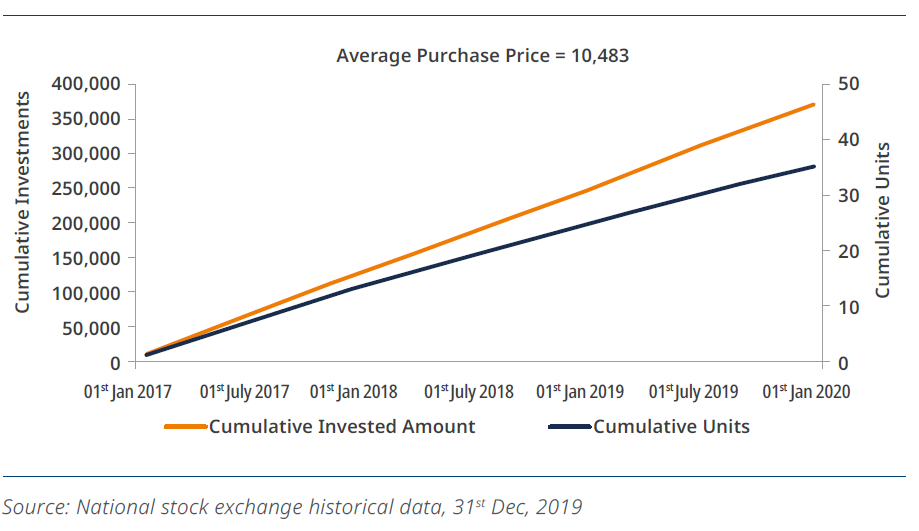
Averaging: Through SIP you buy at different price points (both low and high). This is known as Rupee cost averaging of purchase price. Rupee cost averaging usually lowers your acquisition costs during bear markets and gives potential returns in the long term. The chart below shows how rupee cost averaging Works. Let us assume you started investing in Nifty 50 with Rs 10,000 monthly SIP on 1st January 2017. Till 1st January 2020, you would have invested Rs 360,000 (Rs 10,000 X 12 months X 3 years). The chart below shows how many Nifty units you would have accumulated through SIP over this period. You would have accumulated 35 units at an average price of Rs 10,483 while Nifty on 1st January was 12,185. Your profit per unit is around Rs 1,700. This is how rupee cost averaging works.